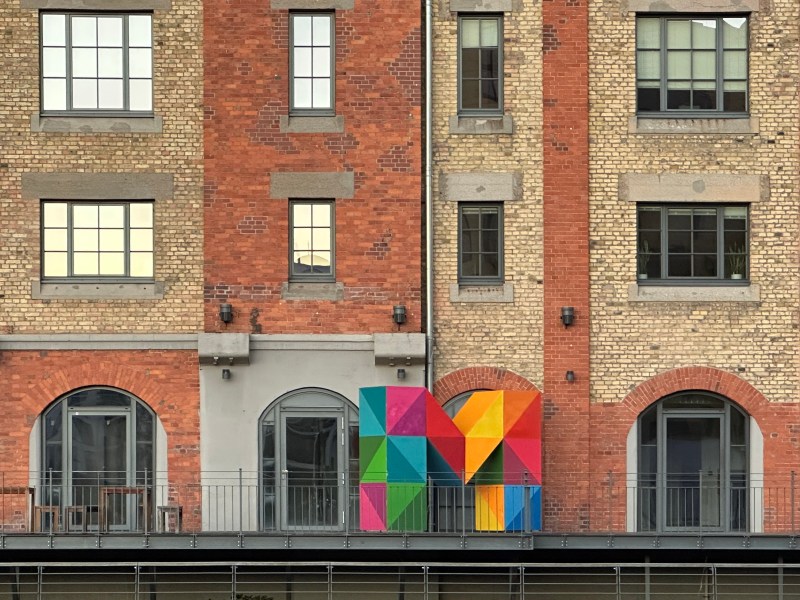

…Mainzer Stadtwerke – Mainz Municipal Utilities – who deliver electricity, gas, drinking water and district heating supply in the region and bus and tram services in the city.
Cool graphics in front of the patchwork structure of the wine warehouse at the Zollhafen, now converted into offices and suchlike with views that would cost you a big chunk of folding stuff
The history of the wine warehouse building in the customs harbour is colourful and varied: cigarettes, ladies’ hats, young people training to become telecommunicators – over the course of its more than 100-year history, the wine warehouse building has housed all kinds of goods and tenants. When the customs port was inaugurated on 6 June 1887, the wine warehouse did not even exist. In the early days of the port, the most impressive building for many decades was the former warehouse building on Zungenkai, which had 12,000 square metres of storage and commercial space. This large warehouse building was destroyed in the Second World War. The wine storage building was only built from 1910 as inspection hall 6 – effectively as an extension to the large storage building on Zungenkai.
Over the decades, all sorts of things were stored and produced here – wine played a rather subordinate role. For example, the ‘Makedon’ cigarette factory was housed here for many years. From the 1950s until the 1990s, the post office trained its apprentices here, and a fashion factory for women’s hats and underwear was also located in the wine storage building.
Wine was also stored here. The J.F. Hillebrand company had a wine warehouse on the third floor. And the Beaury company maintained a barrel warehouse for imported wines from France in the cellar. Last but not least, wines from Algeria were also delivered to the customs harbour.
 Mainz Daily Photo